RESIDENCY DIARY: Part 2…Spend the day with me on artist residency in China
During my 6 week residency at the Guanlan Printmaking Village in Shenzhen, China I slipped into a delicious routine that helped me to overcome the creative niggles and imposter syndrome that can so easily creep in to the process of making.
As somebody with an ADHD brain, I have a bit of a turbulent relationship with ‘routine’. Luckily, the extra dopamine boost from being in a new space—coupled with the chance to pretend I’m a morning person thanks to the wildly different time zone—made it feel like the perfect moment to treat this as a tiny experiment: to play with ritual and structure, and see what deeper creativity might simmer up in the spaces between..
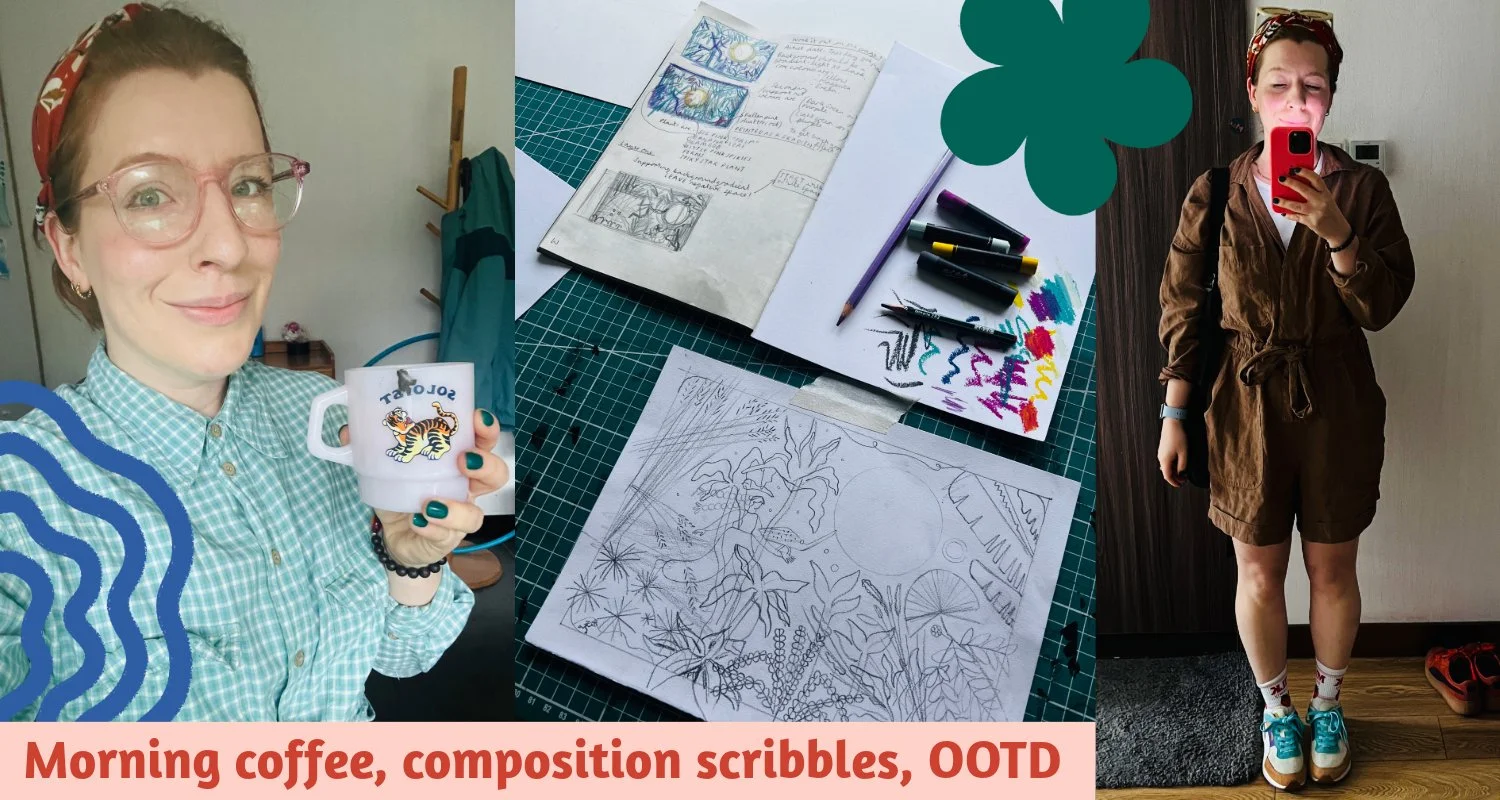
One incredible thing about staying as an artist in residence is having all your earthly requirements met—every basic need taken care of. Meals are served at set times in the canteen, and you’re living just a stone’s throw from the workshop. All that time usually spent on ‘normal life’—shopping, cooking, washing up, walking to the studio, tidying the house—suddenly opens up. Time, delicious time, for long walks through farmland, sketchbook play, journalling, and reading.
I took it as a chance to finally dust off my old, unused copy of The Artist’s Way by Julia Cameron, and commit to morning pages, artist dates, and noticing the small moments of synchronicity and creativity that unfolded each day. With fewer demands pulling at me, I became more aware of the endless inspiration that surrounded me: the colours, shapes, and textures in nature; accidental compositions cast by the long morning shadows of Hakka houses on the spring flower fields.
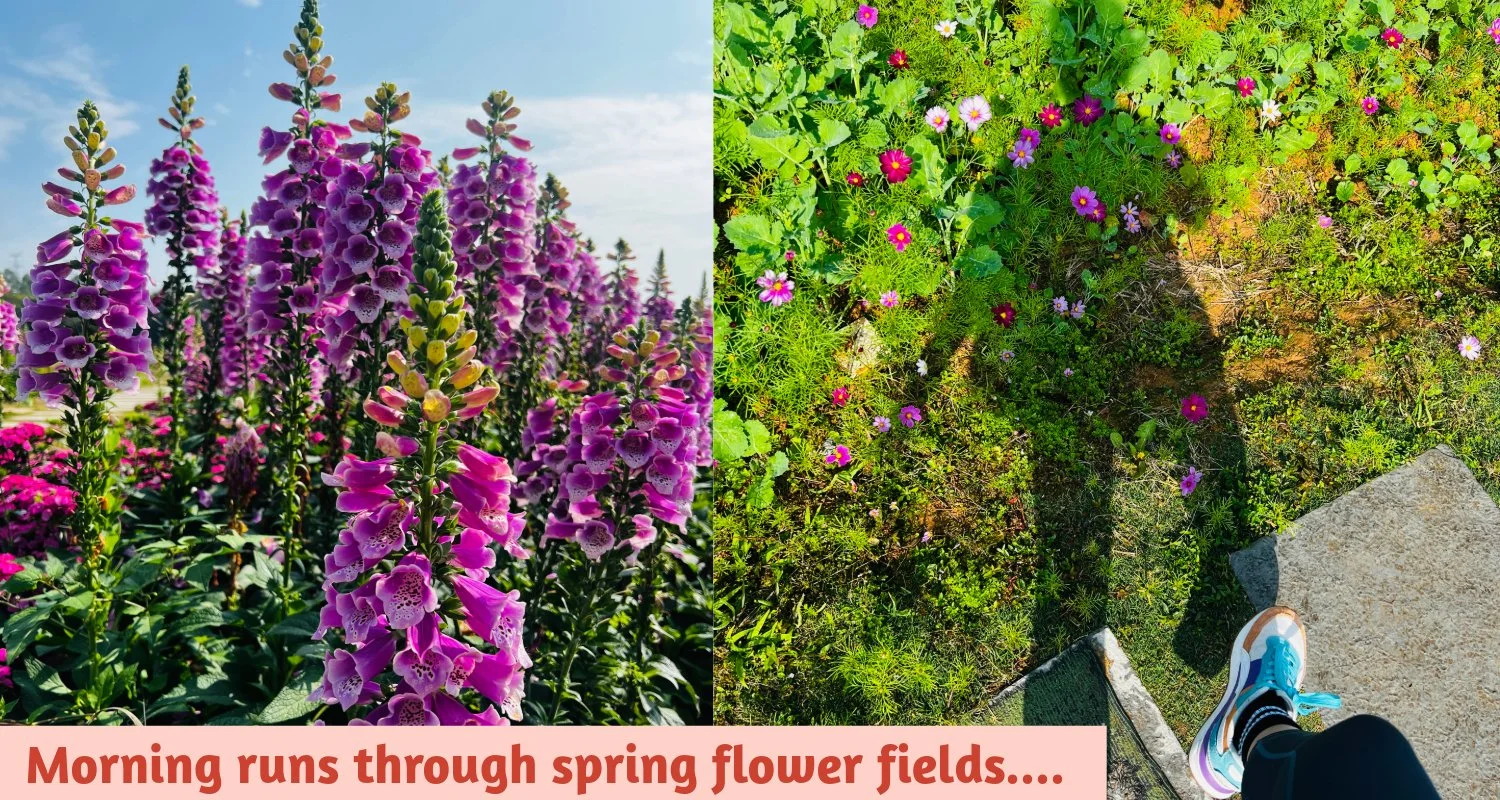
Every day began the same, and yet never quite the same. I’d wake, grind a small mountain of coffee, spill my thoughts onto three quick pages, then slip past strawberry fields and banana leaves for a run in the warm, humming dawn. Breakfast in the canteen—eggs, fresh dou jiang, sweet potatoes, corn, sometimes a tangle of fried noodles—set me up perfectly for a morning in the studio, developing sketches, plans, and compositions for my Dragonfly Diaries screen prints.
The short walk to the workshop always felt like crossing a portal—morning sketches tucked under my arm, the echoes of shapes and shadows from my run still flickering behind my eyes. I’d step through the studio doorway and be met with familiar nods from the ever‑cheerful print team, before climbing the steps to my little studio tucked away upstairs. Golden light spilled across the rows of presses, and the air was thick with the scent of ink, coffee, and of warm tropical spring air drifting in past the palms. A smell of possibility—like the day was wide open, waiting. A fresh chance to piece together whatever world I was trying to build from the half-formed scribbles, colour swatches, and stories swimming in my head.
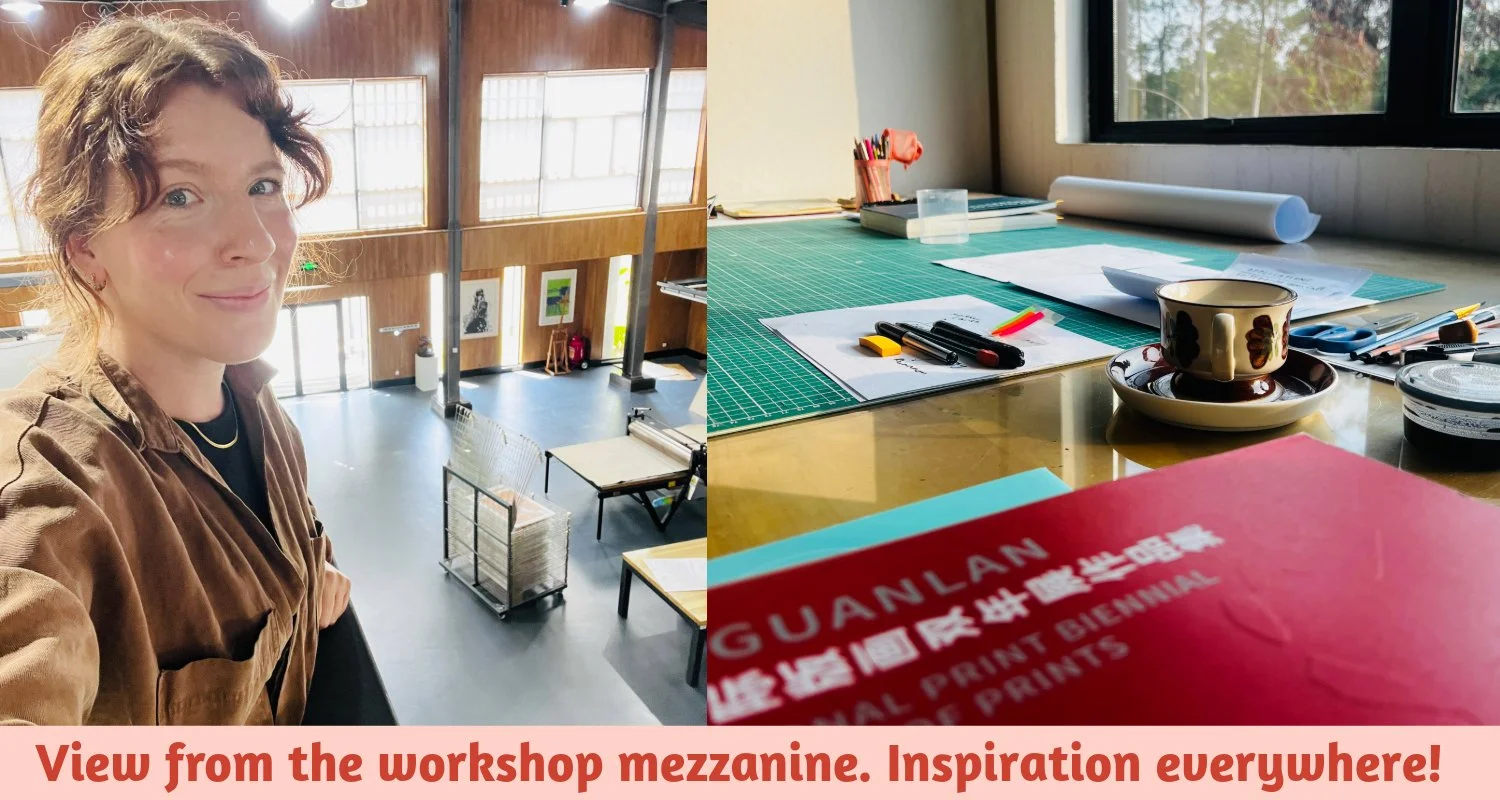
The workshop was seriously impressive — every type of printmaking technique you could think of under one roof. There were huge presses lined up like metal workhorses, cool mottled lithography stones, shelves full of inks in every colour imaginable. And scattered between it all were proof prints left by past residents — little glimpses into their process, reminders that loads of artists had passed through here before me. One wall was covered in black-and-white portraits around a giant map of the world, each pin showing where someone had travelled from to get here. It felt quietly special to be part of that.
Things slowed down a little after lunch, when the technicians went off for their midday rest. That’s when I’d often take a walk around the space — noticing tiny curls of woodcut shavings on the floor, globs of ink waiting on glass, half-read reference books lying open like someone had just stepped away. The whole place had a bit of a treasure trove feel to it. The print team worked away steadily — editioning for visiting artists, boxing up finished prints for exhibitions, setting up for whoever might be arriving next. They were always on hand if I had questions, but for the most part, I was left to get stuck into my own experiments — sketching ideas, working out how many layers I’d need, testing how different colours might sit together.
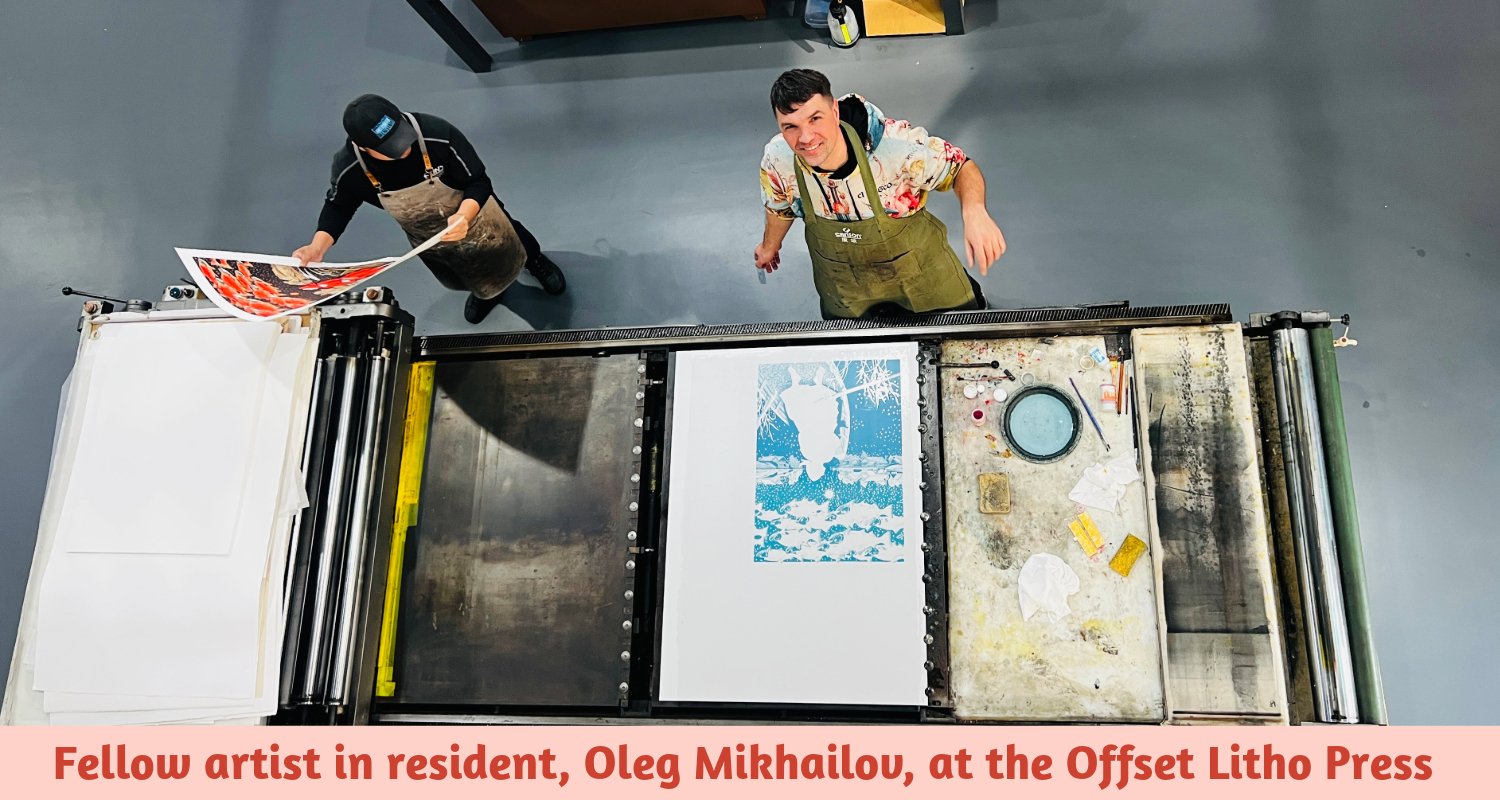
By mid-afternoon, the offset litho press downstairs would usually start up, filling the space with a soft, steady hum. That rhythmic clunk and roll became a kind of background music to my afternoons upstairs. Every now and then I’d step out to stretch my legs or make a ginger tea, leaning on the railing to watch what was going on below — someone carving a woodcut, another layer being pulled through a screen, copper plates catching the light as the sun shifted. Even on the quiet days, there was always something quietly ticking away, some small sign that the work was moving forward.
Those early afternoons were spent journalling, filling sketchbooks, making quick papercut studies, and learning to listen to the creative ideas that had been bubbling up since my last residency—waiting patiently for an opportunity to be seen, heard, and brought to life.
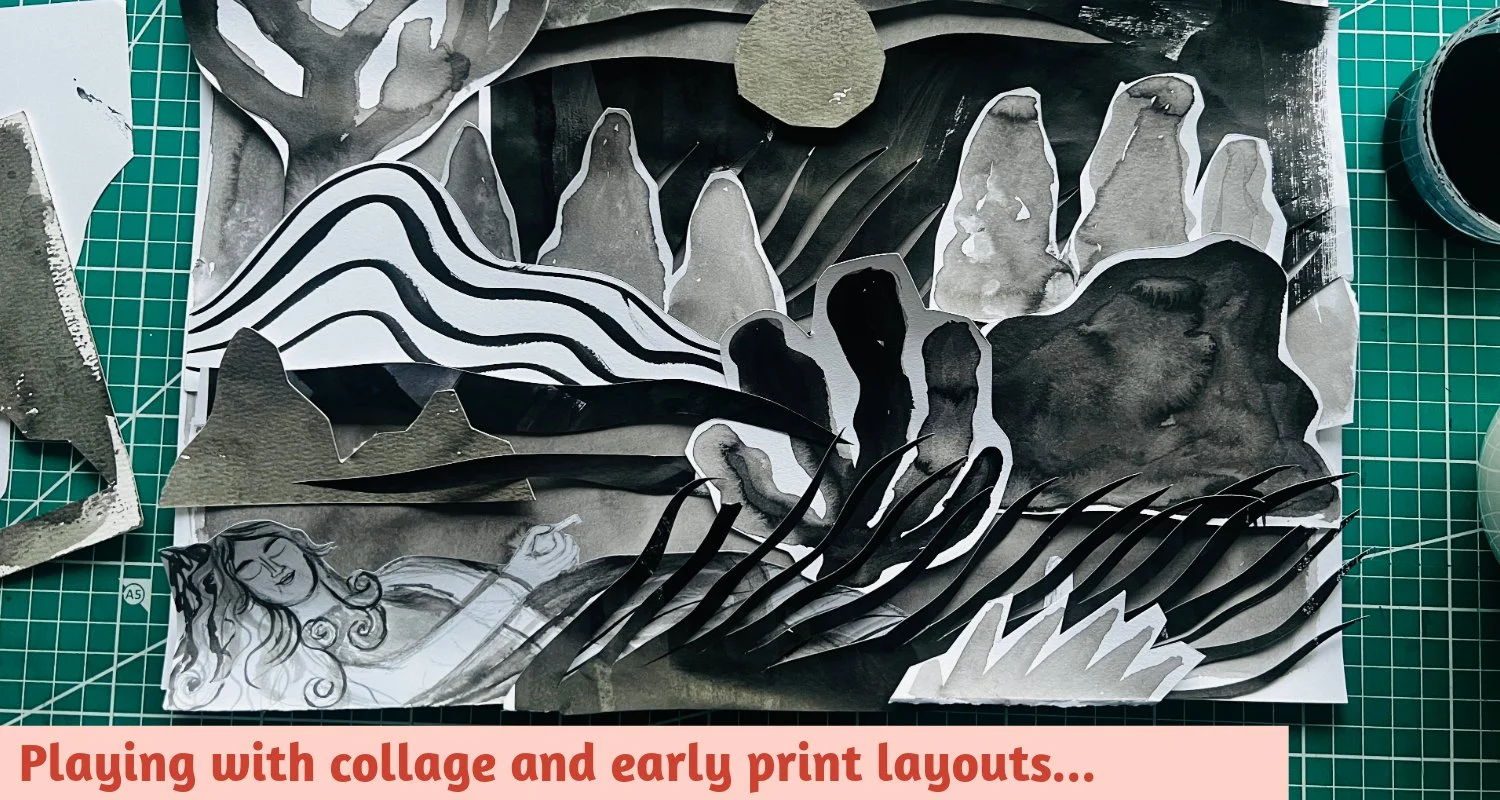
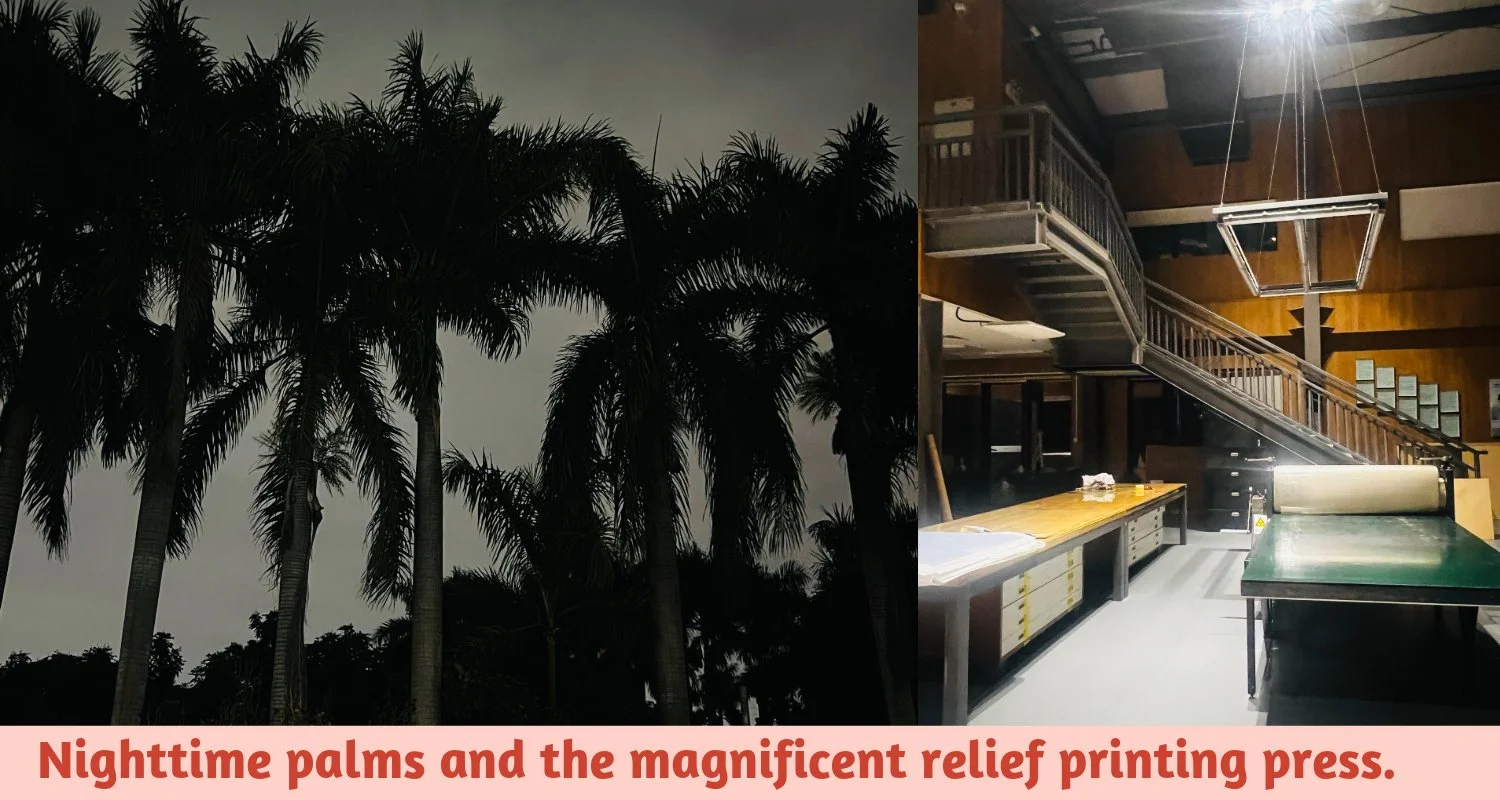
More than anything though, I decided I wanted to have fun. No deadlines, no clients, no limitations from not having a proper studio setup back in Wales. Just time. My afternoons in the studio were broken up by sunny walks around the printmaking village with my sketchbook—capturing the shape of a leaf, a flower, or sometimes the kind faces I encountered along the way.
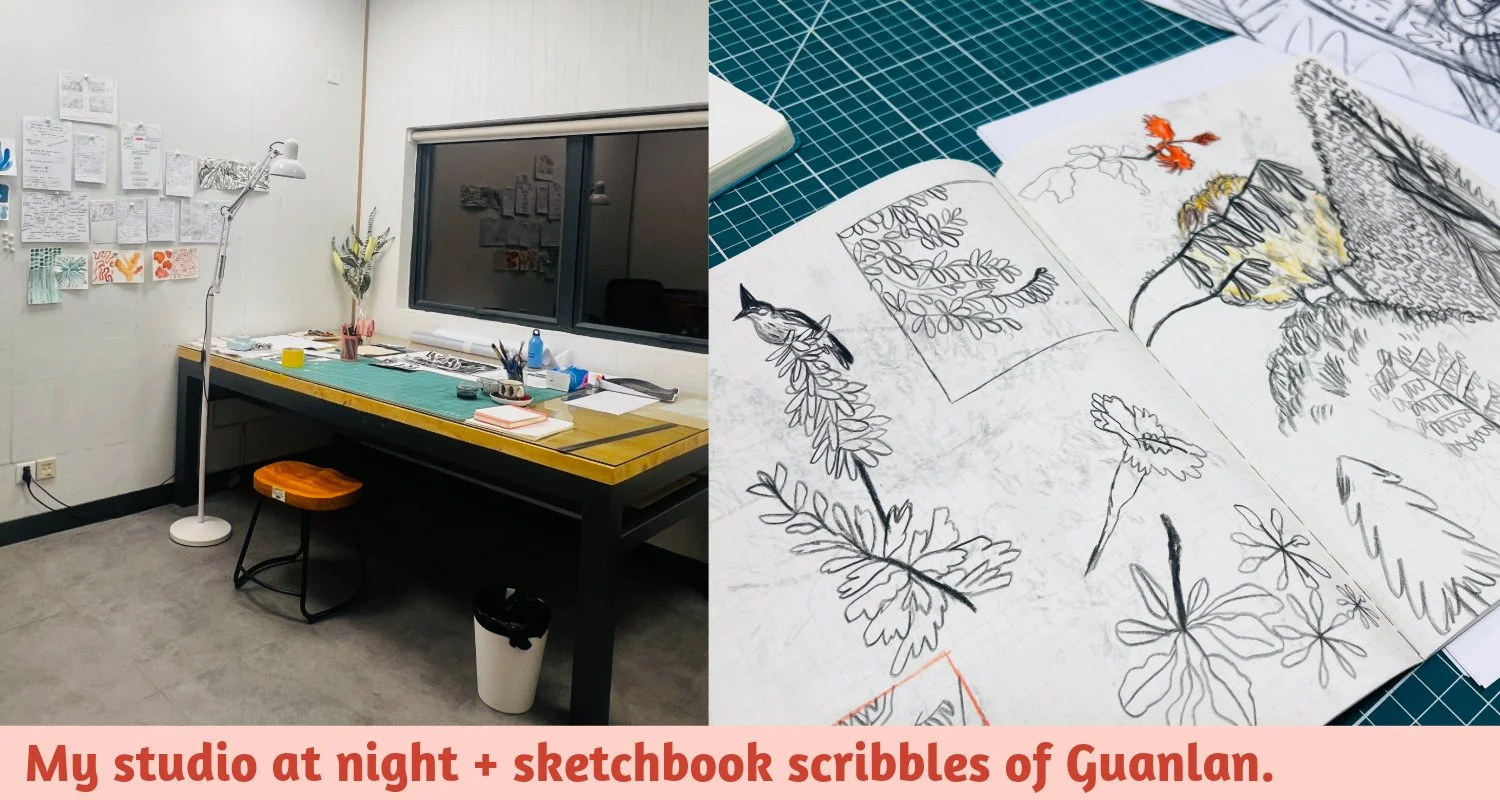
In the evenings, I’d gather it all together—those drawings, ideas, loose pieces—and start making sense of how they could come together. Shaping compositions. Piecing together the characters that were beginning to appear in this next chapter of the Dragonfly Diaries. I’d often linger in the studio until late, sometimes stepping out to share a beer with fellow residents, trading stories of creative highs and hurdles.
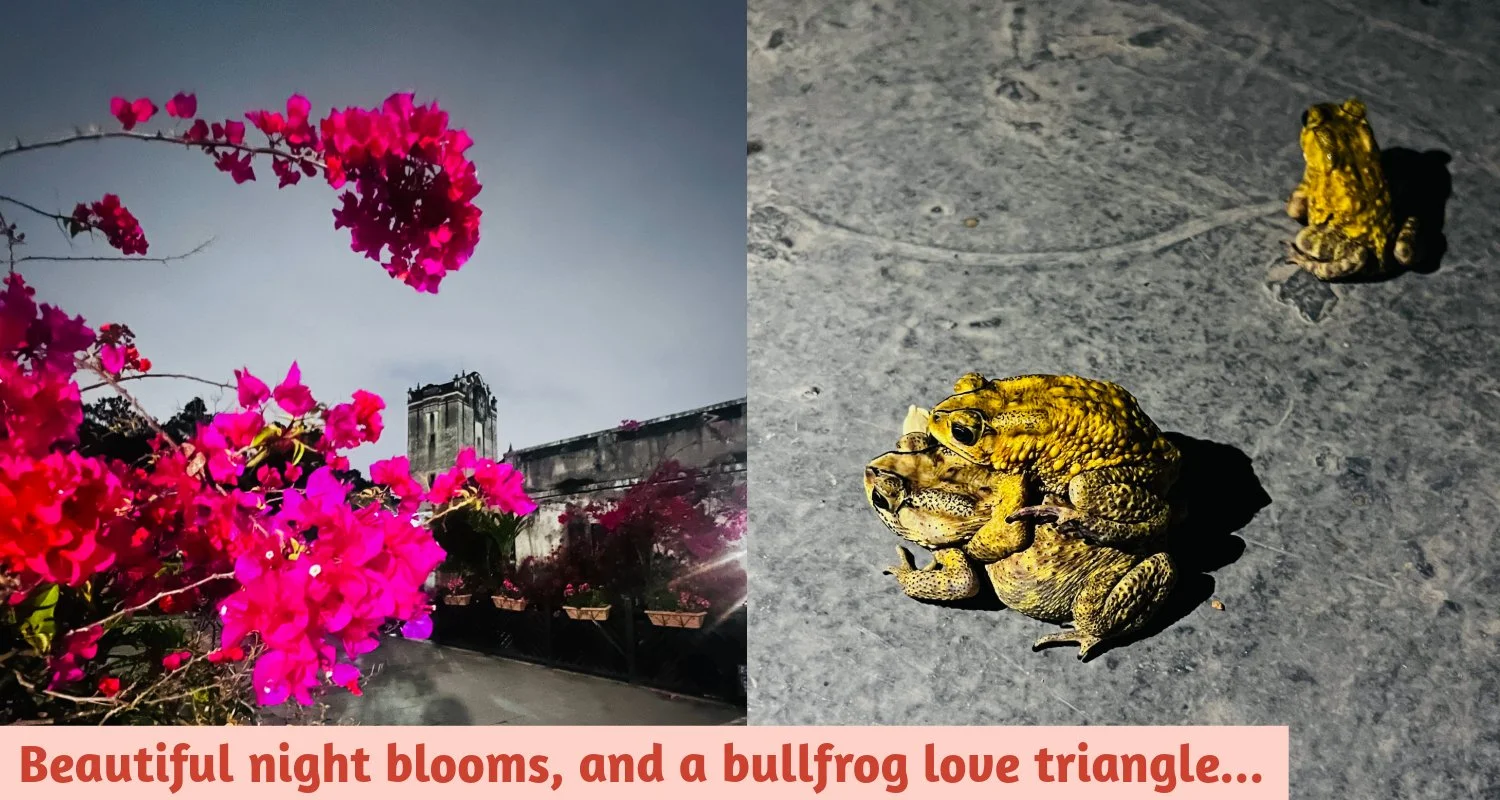
Other times, on clear, warm evenings, I’d wander past the stone Hakka houses, imagining the centuries of stories held within their walls—catching flickers of fireflies, listening to bullfrogs chattering in the dark. The night-time became my muse. In the dark, things came into focus—bruised purples, hazy pinks, the cascading shapes of torn banana leaves framing each view. Those colours lingered with me, seeping into the prints that followed.
In my next blog, I’ll wander a little deeper into the night—into the quiet mysteries, shadowy paths, and the strange beauty that’s made the darkness my muse.